Era Pickleball: How to Maximize Your Time at the Club
When I first started playing at Era Pickleball, the court was a loud, friendly jumble of voices, bouncing paddles, and the satisfying thwack of a well struck ball. It was a place where improvement happened in the margins, between warmups and the next round. Over the years, I learned that maximizing time at the club isn’t about cramming more drills into a session. It’s about curating the right mix of play, practice, rest, and community so that every minute on the court moves you forward. Here’s how to approach Era Pickleball with purpose, whether you’re chasing wins, refining your technique, or simply looking to maintain a healthy balance between competition and camaraderie.
A club is an ecosystem. It exists not just to host matches but to support a spectrum of players—from curious beginners to seasoned veterans. The first thing you notice at Era Pickleball is the scale of the facility. Indoor courts sit in a bright, controlled environment that keeps balls predictable and feet comfortable, especially when the weather outside shifts from damp to brisk. Outdoor courts have their own rhythm, wind sometimes shaping a rally as much as a player’s racquet. The key to making the most of your time is recognizing how the space changes your approach, and then tailoring your plan to the hour you’ve allocated.
The practical details matter as much as the big goals. When I walk into Era Pickleball, I start with a quick mental check of three things: today’s target, today’s partners, and today’s energy. It’s a small ritual, but it orients the session in a way that makes a real difference when the clock is ticking.
Structure practiced routines around real needs
There’s a lot of advice out there about “deliberate practice,” and you’ll hear versions of it at Era Pickleball from coaches, staff, and even fellow players who have learned to structure their days. The essence is simple: you aren’t just swinging at a ball. You’re building specific, repeatable actions that translate into match play. The challenge is translating that idea into a practical, one-hour or two-hour block when you’re juggling court availability, potential partners, and the unpredictable pace of a club night.
For beginners, the first priority is rhythm. The court surfaces, the light, and the social energy all influence timing. You may learn more in a 60-minute block by focusing on a controlled drill with a single objective—serves that land in the right spot, drives that push your opponent off the line, or a reliable transition from lob to net. For intermediates, the emphasis shifts toward consistency under pressure. The goal is not to win every rally but to keep yourself alive in the point by reducing unforced errors and by recognizing patterns in your opponent’s responses. Advanced players, meanwhile, lean into rapid decision making, shot variety, and the subtle craft of pace management that keeps opponents guessing.
The club is full of people who do this well without talking themselves into the ground. They set a boundary for practice that can be carried into a match. They might drill a target zone for 15 minutes, then rotate to two short live games where each rally is a mini-scenario you want to study. It’s not about grinding out hours of repetitive shots; it’s about capturing meaningful data from every rally, then returning to the drill with a sharper aim.
Plan around the court layout and peak times
Era Pickleball facilities often offer both indoor and outdoor options, with distinct advantages. Indoor courts provide steady conditions, which is a huge plus for practicing precise shots and footwork. On colder days, indoor sessions feel almost like a luxury because the footing remains rock solid and your hands stay warm enough to grip the paddle without stress. Outdoor courts, by contrast, can introduce wind, sun glare, and variations in court temperature. These factors aren’t obstacles; they’re training scenarios. They force you to adapt, to anticipate, and to adjust your stance and swing on the fly.
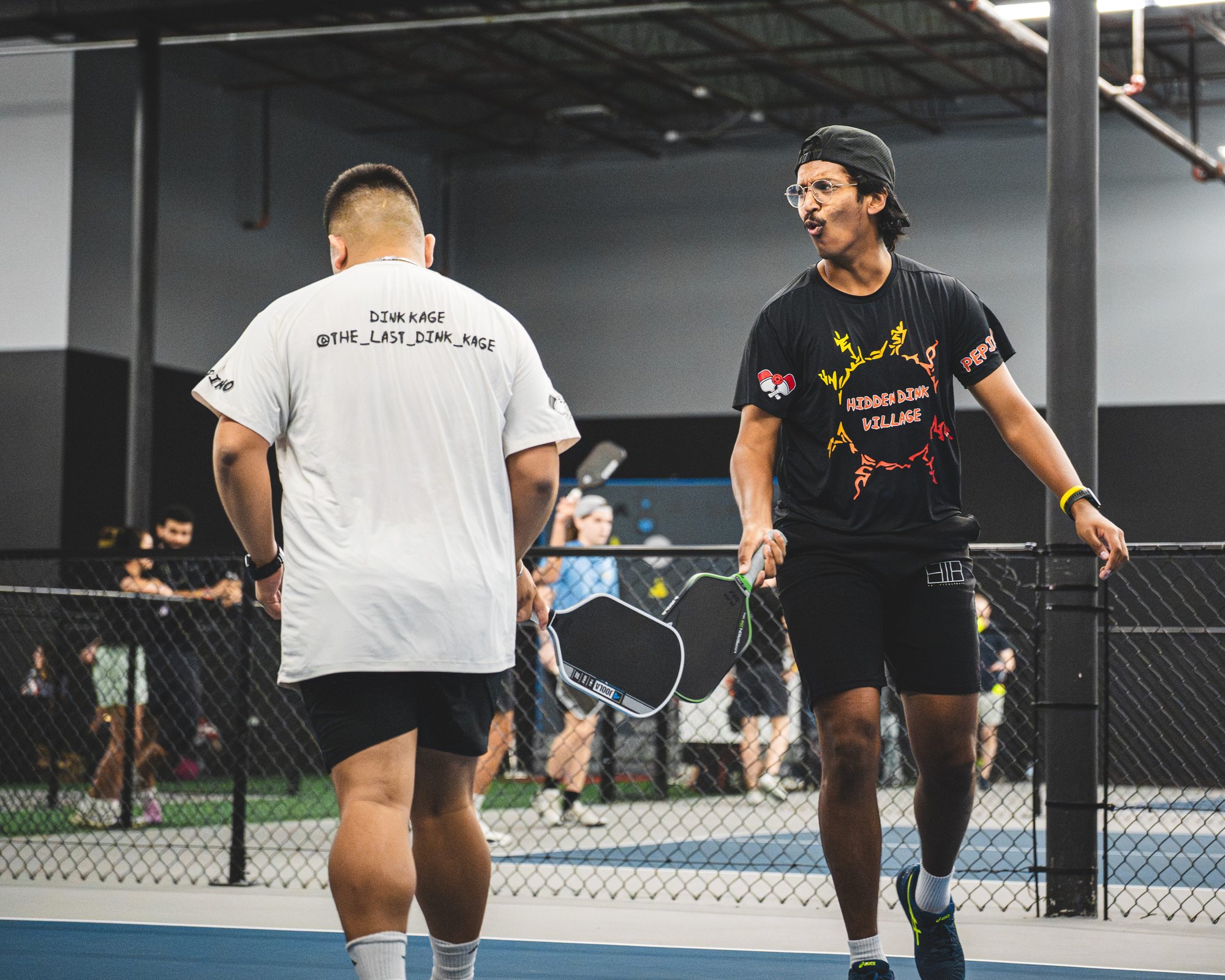
If your schedule allows, align your most technical or demanding drills with indoor session times when consistency is easier to secure. Save outdoor slots for competitive play or for drills that benefit from natural elements, such as adjusting to a wind gust or reading ball spin in sunlight. This isn’t just about weather. It’s about letting your mind calibrate to different environments so you’re not caught flat-footed during a late-night league match or a weekend tournament.
Small, steady gains add up
The realities of a club environment can be chaotic in a good way. There’s always a new partner, a new rival, or a fresh strategy to observe. The most effective players I know don’t rely on one big breakthrough. They accumulate small, steady gains—one tweak here, one better choice there—that compound over weeks and months. That may look like a sharper support volley to keep a rally going, a more deliberate approach to retreating to the baseline when pressure builds, or learning to read a rival’s favorite transition shot and anticipate it a half-step earlier.
The key is to capture evidence of improvement without turning every session into a data dump. A quick mental note is often enough. If you’re not sure what to track, start with three concrete indicators: first, does your serve give you control rather than inviting your opponent to attack? Second, are you maintaining consistent depth on your drives so the ball isn’t floating or short? Third, do your net approaches feel deliberate or reactive? If you can answer those questions at the end of each session with a clear yes or no, you’ve already moved beyond aimless practice.
Choosing when to play, and with whom
A club is a social environment as much as a training ground. The right partner rhythm can make a big difference in how much you get done in a single visit. I’ve found that a cooperative partner who understands the concept of deliberate practice often does more for your improvement than a high-ranked opponent who plays you hard but unsystematically. The former helps you test your modes under gentle pressure; the latter pushes you into tough positions that reveal gaps more quickly.
One practical approach is to commit to a mix of formats across a week. Schedule a couple of sessions with a cooperative partner for controlled drills, then a few rounds of competitive play to stress-test your patterns. If you want to fast-track your learning curve, tell your practice partner the objective before you begin. For instance, you might say, “Today we keep the ball low and deep, and we work on finishing points with a short, sharp drive to the opponent’s weaker side.” You’ll be surprised at how a shared intention changes the tone of a match.
The club’s calendar often reflects this blend too. Leagues and social rounds provide a natural cadence that keeps your game honest without turning every session into a tournament grind. If you’re new to leagues, start with mixed-difficulty formats or organizers who pair players by rating or recent performance. The idea isn’t to dominate or disappear; it’s to place yourself in a continuum where your results are a reflection of consistent effort rather than a single loud performance.
A practical mindset for every visit
The day-to-day experience of Era Pickleball can feel like stepping into a living routine, and that’s healthier than it sounds. It means there’s a built-in feedback loop. You swing, you adjust, you learn. If you want to maximize time, you must turn that loop into a habit.
A few practical riffs that help me stay on track during a hectic club night:
- Before you start, choose one technical area to test. It might be your return of serve, your drive consistency, or your net positioning. Keep everything else in reserve.
- After a set, briefly pause to assess. Ask yourself if each rally met the objective you set at the start. If not, consider a micro-adjustment and revisit it in the next session.
- End with a short, high-payoff drill. A tight, cross-court dink pattern that you can execute in two to three steps is a reliable way to finish on a positive note.
- For the social side, find one person to exchange feedback with each week. A fresh perspective can reveal blind spots you’d otherwise overlook.
- Leave a short note in your practice log. It doesn’t have to be elaborate. A sentence or two about what went well and what to improve next time helps you track progress over time.
The experience of playing with the Era Pickleball community
What makes Era Pickleball distinct is the people who inhabit the space. The club is not a quiet gym with a single trainer; it’s a mosaic of personalities, traditions, and unspoken rules about how to climb the learning curve without stepping on anyone’s toes. You’ll meet players who value consistency over flash, and others who chase aggressive serves and fast transitions with a fearless grin. If you want to fit in and move quickly, observe the etiquette in action: arrive on time, offer a partner swap when your game stalls, and be generous about sharing tips that helped you during a tough stretch.
The social surface is an underappreciated engine of improvement. When you know you’ll meet someone you admire at the next court, you push a little harder, not out of vanity but out of a shared commitment to the game. The best sessions I’ve had were not the ones with the loudest rallies but the ones where someone offered a small pivot that changed how I approached the next point. Those moments are the real currency of Era Pickleball.
A note on equipment and facility features
Era Pickleball runs a robust program for both indoor and outdoor play, with equipment that stays in good condition and courts that are maintained with attention to safety and feel. If you’re shopping for paddles or shoes, the staff and fellow players can be an invaluable resource. People are quick to share what works for their body type and style—two factors that matter far more than any marketing claim. Indoor surfaces tend to slow a ball slightly and reduce the bounce variability you might experience on outdoor asphalt or concrete. That difference is meaningful when you’re practicing control versus relying on pace alone.
If you’re exploring membership options, consider what you want from the club beyond the hour-by-hour court time. Some members prioritize frequent access to multiple court spaces, while others value the social calendar, clinics, or formal leagues. The right choice for you depends on your goals, your budget, and how you want your pickleball life to thread through your weekly routine. It’s not just about access; it’s about the quality of that access and the pace at which you can translate practice into match results.
A realistic view of progress and setbacks
Nobody improves in a straight line, especially in a sport where anticipation and reflexes play as large a role as raw technique. There are months when your serve begins to land with more reliability, followed by weeks when you forget the simplest drop shot at a critical moment. Setbacks happen to everyone, even the most consistent club players. The important thing is how you respond. If you allow a dry spell to erase your confidence, you’ll miss the chance to relearn something more deeply stored—timing, balance, or a subtle shift in how you approach the kitchen line.
During tough patches, I’ve found it useful to lean on a small repertoire of go-to patterns. These might be a controlled dink sequence that keeps pressure high without risking the reset, or a dependable cross-court drive that prevents your opponent from stepping in aggressively. The point isn’t to rely on a single antidote; it’s to own a handful of reliable options and to practice them under pressure so they’re not forgotten when a rally becomes a test of nerves.
A longer view: leagues, clinics, and the path forward
If your goals include competitive success, you’ll want to blend informal play with structured opportunities to grow. Leagues are not just about winning or losses; they are a curated arena where your weaknesses become visible patterns that you can address in the gym and on the court. Clinics at Era Pickleball can crystallize core concepts you’ve been working on in a more compressed time frame. A well-choreographed clinic will present you with drills that have a clear payoff and a demonstrable link to match performance.
Beyond the instructional programs, the social fabric of the club is a continuous education in itself. You’ll hear stories about weekend tournaments, travel circuits, and the small hacks that long-tenured players rely on to extend their longevity on the court. The beauty of this ecosystem is that you can plug into the parts that resonate with you. If you enjoy the data-driven approach, you’ll seek the advanced drills and match analysis. If you’re more interested in the human drama, you’ll chase the weekend round robins with a smile and a steady partner rotation.
Two practical ways to optimize your club experience
- Always enter with a clear objective for the session. A precise goal makes it easier to measure progress and to resist the drift toward aimless rallying.
- Schedule a recurring time for a specific activity. Consistency builds muscle memory. Whether it’s a Tuesday indoor drill or a Sunday outdoor practice, routine matters more than the single great rally you might have in a given week.
What to expect when you commit to a season at Era Pickleball
A season is more than a span of weeks; it is a trajectory that reveals your tolerance for effort and your ability to absorb feedback. Some seasons feel like a gentle climb. You notice you’re hitting the ball with more control, you’re reading your opponent’s patterns more quickly, and your long rallies feel less punishing. Other seasons throw a harsher test: a player who defends everything, an opponent who changes pace mid rally, or a set of conditions that pushes you to adjust your stance and timing for a longer stretch.
Even then, the club remains a consistent partner in your development. this website The facility’s layout, the timing of clinics, the rhythm of leagues, and the social ties formed in the lounge or during warmups all contribute to an environment where you can push forward incrementally without burning out. The true advantage of Era Pickleball is that you can shape your experience around your life. If family obligations or work demands a faster pace, you can still reserve a few moments on a weekday to squeeze in a meaningful drilling block. If you crave depth and sustained focus, the weekend schedule offers longer blocks that let you sink into a technique or a strategic game plan and watch it translate into scores.
A note on staying healthy and preventing burnout
The demands of regular pickleball play can accumulate quickly, especially if you’re chasing a high rate of practice. It’s essential to balance intensity with recovery. Hydration, proper footwear with good lateral support, and a consistent warm-up routine protect you from common overuse injuries. If you routinely play two or more days in a row, consider designating one of those days for lighter drills or for strategy work rather than high-intensity point play. For some players, a dedicated cross-training routine—light cardio, core work, and mobility training—can keep you in peak form without turning pickleball into the sole pillar of your week.
The Era Pickleball experience rewards those who approach the club as a living system rather than as a simple venue. It rewards consistency, thoughtful practice, and a willingness to adapt to different court environments. It rewards good humor and a sense of community, because performance improves more reliably when you enjoy the process and the people you share the court with.
Closing thoughts from the court and the lounge
If you were to step back and listen to the rhythm of Era Pickleball, you’d hear more than the bounce of balls. You’d hear the quiet agreements of players who know that improvement is not dramatic but cumulative. You’d hear the laughter after a short, clever dink that catches your opponent off balance. You’d hear the nods and the occasional quiet words of encouragement that travel across a court as someone runs toward a net ball and makes a split-second decision that pays off.
And you’d notice something else: everyone, in their own way, is trying to maximize the same thing you are. Time. Not more time in the abstract, but meaningful time on the court. Time spent learning, time spent laughing, time spent chasing a ball that lands precisely where you hoped. Time spent making friends, building routines, and discovering what it means to play with someone who can push you a notch higher than you thought you could go.
Era Pickleball isn’t merely a club with a nice facility and good courts. It’s a community that, when you lean into it, helps you become the player you hoped you could be. The journey isn’t a straight line; it’s a river with eddies and currents, a place where your best days are born from ordinary ones, where practice compounds into performance, and where the people you meet along the way remind you why you fell in love with the sport in the first place. If you’re looking for a place to grow your game, to test your limits, and to feel truly part of a pickleball world that treats every rally as a chance to learn, Era Pickleball is the kind of club that makes time feel well spent.
Ends · REIDDVVW508